A premium bathroom is often defined by what you do not see. The best recessed accessories remove the visual noise created by wall-mounted holders, floor-standing brushes, exposed bins, and crowded ledges. Built directly into the tiled wall, they create an orderly, elegant space where every necessary function has a precise place.
This is not simply a style choice. Recessed bathroom details free up usable space, reduce hard-to-clean surfaces, and give the entire room a more intentional architectural finish. The key is choosing the right elements early enough in the project, then coordinating them with the wall construction, tile format, and concealed sanitary systems.
Why Recessed Accessories Change the Bathroom
A conventional bathroom can accumulate small interruptions quickly: a toilet brush next to the bowl, a wastebasket pushed against the wall, a paper holder projecting into a narrow passage, hooks that interrupt a tile layout. Each item may be functional on its own, but together they can make an otherwise refined room feel busy.
Recessed accessories solve that problem at the source. Their working components sit within the wall cavity while the visible face remains flush or nearly flush with the finished tile surface. The effect is quiet, clean, and deliberately minimal.
The practical benefit matters just as much. Fewer items on the floor make vacuuming and mopping easier. Fewer exposed brackets reduce edges where dust and moisture collect. In a compact powder room, even a small recessed niche can improve circulation around the toilet. In a larger primary bathroom, the same detail supports the calm, hotel-level feeling that loose accessories rarely achieve.
That said, recessed design requires planning. These are not typically items to choose after tile installation. Wall depth, framing, plumbing routes, flush plate locations, and tile dimensions all affect the final result. The best projects treat these details as part of the bathroom architecture, not as accessories added at the end.
The Best Recessed Accessories by Function
Concealed toilet brushes for better hygiene
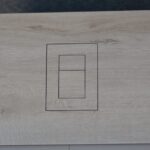
A toilet brush is necessary, but it does not need to be a visible object in the room. A recessed toilet brush holder keeps the brush discreetly inside the wall, with a refined cover plate that aligns with the rest of the bathroom finish.
The visual advantage is immediate: no plastic container beside the toilet and no object competing with a clean tile wall. It also improves floor hygiene because there is no freestanding holder to move when cleaning.
Placement should be convenient but unobtrusive. Install it within easy reach of the toilet without placing it where the door swing, vanity, or user movement becomes restricted. Consider the service side as well. The insert needs to be removable for cleaning and replacement, so access should remain simple after the room is finished.
Recessed waste bins that disappear into the wall
A wall-integrated waste bin is one of the strongest upgrades for a polished toilet room or vanity area. It removes the small floor bin that tends to shift, collect dust behind it, and interrupt the visual line of the wall.
A recessed bin works especially well next to a wall-hung toilet, where the open floor underneath already creates a lighter and more spacious appearance. The bin becomes part of the wall plane rather than an object placed in front of it.
Capacity is the trade-off. A concealed bin is intentionally compact, which is ideal for tissues, cosmetic cotton pads, and everyday bathroom waste, but it may need more frequent emptying than a large freestanding bin. For a guest bathroom or powder room, that trade-off is usually worthwhile. In a heavily used family bathroom, choose a size that matches realistic daily use.
Hidden toilet paper holders for a flush wall line
A recessed toilet paper holder eliminates one of the most common projections near the toilet. Instead of a roll extending from a metal arm, it sits within a neatly framed wall opening. The result is safer in narrow rooms and more visually controlled in every room.
This accessory makes particular sense when the toilet is positioned close to a side wall. Traditional holders can obstruct movement or create an uncomfortable point of contact. A recessed version keeps the roll accessible without reducing clearance.
Before selecting the location, check the toilet centerline, seat height, and the reach of the person using it. A perfectly concealed holder is not successful if it is awkward to use. Function comes first, then the detail can be positioned to support the cleanest possible composition.
Flush hooks and recessed towel details
Towels can either reinforce an organized bathroom or make it feel crowded. Standard hooks and bars often project significantly from the wall, especially when several are grouped near a shower or vanity. Recessed hooks and integrated towel details reduce that projection while keeping towels where they belong.
These details are especially effective in compact bathrooms, where a conventional hook can interfere with circulation. They also suit minimalist interiors that use large-format tile, microcement, or stone-look surfaces. A discreet recessed element allows the wall material to remain visually dominant.
For daily-use towels, consider drying performance. A deeply recessed solution may be best for a robe or hand towel, while a full towel bar may still be more practical where airflow is needed. The most refined bathroom does not eliminate every visible accessory at any cost. It chooses the least intrusive solution that performs well.
Recessed flush plates as part of the design
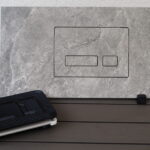
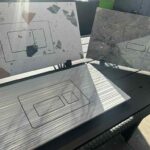
A flush plate is one of the few elements that must remain visible on a concealed toilet installation. It deserves more attention than it usually receives. A recessed flush plate can sit aligned with the wall finish and transform a standard technical component into a precise design detail.
Compatibility is critical here. The plate and installation approach must match the concealed cistern system, including common systems from Geberit or Grohe. This is not an area for assumptions. Confirm the exact model, frame dimensions, actuation requirements, and service access before the wall is closed.
When properly coordinated, a flush plate becomes a controlled accent rather than a disruption. Its finish can complement faucets and hardware, while its geometry can align with grout joints or the edges of adjacent recessed accessories.
Plan Recessed Accessories Before the Tile Is Selected
The quality of a recessed detail depends on more than the product itself. It depends on the decisions around it. Wall construction needs enough depth for the body of the accessory, plus room for safe routing of plumbing and electrical components where applicable. In renovation projects, this may mean building out a wall or creating a purpose-designed service wall.
Tile selection also influences the result. Large-format tiles can create a nearly monolithic wall, but their cuts must be planned carefully around openings. Small-format tile is more forgiving around complex shapes, although grout lines become a more visible part of the composition. Neither option is automatically better. The right choice depends on the desired visual rhythm and the installer’s cutting plan.
Coordinate the accessory locations before finalizing the tile layout. Aligning frames with grout joints, vanity edges, flush plates, and niche openings makes the wall feel intentional. Random placement can make even premium components look like late additions.
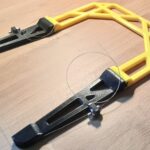
For professionals, templates and accurate cutting tools are not optional extras. They protect the geometry of the installation, minimize chipped edges, and speed up repeatable work. A clean recessed detail demands clean cuts. Diamond blades, manual tile cutters, and precision accessories for tools such as Proxxon MICROMOT equipment all support the level of execution a flush installation requires.
What to Check Before You Choose
The right recessed accessory should fit the room, the user, and the technical build-up behind the wall. Before ordering, verify four practical points:
- Available wall depth and the position of pipes, studs, and concealed frames.
- Compatibility with the selected toilet system, especially for recessed flush plates.
- Access for emptying, cleaning, replacing consumables, and future servicing.
- The tile layout, including how cuts and grout lines will meet each frame.
Material quality deserves attention as well. Bathrooms are humid, frequently cleaned environments. Components should be designed for long-term moisture exposure, with surfaces that are easy to wipe and inserts that can be removed without difficulty. A concealed accessory should reduce maintenance, not create a hidden area that is hard to service.
Build a Bathroom With Fewer Interruptions
The strongest recessed bathroom designs are not filled with hidden features merely because they can be. They use concealment where it improves the room: at the toilet, beside the vanity, within a narrow circulation zone, or on the wall that should remain visually calm.
PS-Tile approaches these elements as integrated architectural details rather than add-ons. That distinction matters when the goal is a bathroom that feels clean long after installation day. Plan the functions first, reserve space inside the wall, and let the finished tile surface carry the design with as few interruptions as possible.