A bathroom can have premium tile, a frameless shower, and a carefully chosen vanity, yet still feel unfinished because of what sits on the wall. A visible toilet brush, protruding paper holder, loose hooks, and a small trash can all interrupt the composition. Minimalist bathroom accessories solve that problem when they are planned as part of the wall, not added after the room is complete.
The strongest minimalist interiors are not empty. They are highly considered. Every necessary function has a place, but that place is discreet, easy to use, and aligned with the tile layout. Built-in accessories replace visual clutter with clean surfaces, making even a compact bathroom feel calmer, larger, and more luxurious.
Why minimalist bathroom accessories belong inside the plan
A wall-mounted accessory may be practical, but it still creates a visible object, a shadow line, and another surface to clean around. When several of these pieces accumulate near the toilet or vanity, the room quickly loses its architectural clarity. This is especially noticeable in bathrooms finished with large-format tile, natural stone, or continuous microcement surfaces.
Built-in details create a different result. A recessed toilet brush holder, concealed toilet paper storage, flush towel hook, or integrated waste bin can perform its purpose without competing with the tile, fixtures, or lighting. The eye reads the wall as one clean plane rather than a collection of attached products.
There is also a functional advantage. Fewer protruding accessories mean fewer awkward corners where dust, moisture, and cleaning residue can collect. In a smaller powder room, removing objects from the floor and wall edges can also improve circulation. The difference may be measured in inches, but the visual effect is substantial.
Minimalism does not mean hiding every object at any cost. It means deciding which elements deserve to remain visible. A sculptural faucet or a beautiful towel can add warmth. The everyday utility items that tend to look temporary are the ones worth integrating.
The built-in details that make the biggest difference
Recessed toilet brush holders
The toilet brush is essential, but it rarely improves a bathroom visually. A freestanding holder also occupies floor space and can trap moisture around its base. A recessed holder moves this necessary item into the wall, where it remains accessible but no longer defines the toilet area.
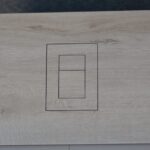
The best result is a precisely tiled opening with a discreet cover or insert that sits cleanly within the surrounding surface. Position matters: it should be convenient to reach without being the first thing seen when entering the room. For a refined installation, align the opening with grout lines or the geometry of large-format tile.
Concealed toilet paper holders
A conventional paper holder projects from the wall and is often installed as an afterthought. A recessed holder places the roll within the wall depth, creating a flatter, more composed elevation around the toilet.
This detail works especially well with wall-hung toilets and concealed cistern systems, where the goal is already to reduce visible hardware. The trade-off is planning. The holder needs a suitable wall cavity and must not conflict with plumbing, framing, or the cistern frame. It should be specified before tile installation, not improvised after the wall is finished.
Integrated waste bins
A small trash can is useful near the toilet or vanity, but it is also one of the most visually disruptive bathroom objects. It moves when cleaning, catches dust behind it, and can feel undersized in a premium room. A built-in waste bin gives this function a defined location while keeping the floor clear.
An integrated model is particularly effective in guest bathrooms and powder rooms, where every visible item has greater impact. It should be easy to open, remove, and clean. Minimalism that makes maintenance difficult is not functional minimalism.
Flush towel hooks and recessed hanging points
Towels need air circulation, but oversized bars and protruding hooks can make a narrow bathroom feel crowded. Flush or recessed hanging solutions reduce projection while preserving a practical place for a hand towel, robe, or shower towel.
The right choice depends on use. A single hook can be enough in a powder room. A primary bathroom may require more capacity and better airflow, so a longer bar or a planned drying zone may be the better answer. The goal is not to use fewer accessories blindly. It is to give each accessory a clear purpose and a quiet form.
Recessed flush plates and service details
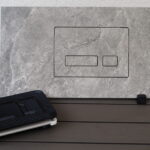
A flush plate is used constantly, so it does not need to disappear completely. It does need to sit with precision. A recessed plate can make the toilet wall feel more integrated, particularly when paired with a wall-hung bowl and continuous tile.
This is where technical compatibility matters. Concealed systems from manufacturers such as Geberit and Grohe have specific dimensions and service requirements. A solution should fit the chosen system correctly and preserve access for maintenance. A clean finish is only premium when it remains practical long after installation day.
Design the wall before selecting the tile
The common mistake is to choose accessories at the end of a renovation. By that point, stud locations, plumbing routes, waterproofing layers, and tile cuts may already be fixed. Built-in components need to be coordinated early, ideally while the bathroom layout is still being developed.
Start with the functions required in each zone. Around the toilet, consider paper storage, a brush, a waste bin, and the flush plate. At the vanity, consider hand towel placement and the items that would otherwise end up on the counter. Near the shower, decide whether towels, niches, or hooks need to be integrated into the wall plan.
Then review the wall construction. A shallow partition may not accommodate every recessed component. A structural wall may limit where openings can be formed. Plumbing, electrical lines, and concealed frames need protected clearance. This is not a reason to abandon the idea. It is a reason to coordinate the detail with the architect, installer, and tile professional before work begins.
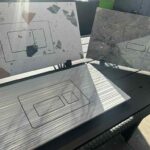
Tile layout deserves equal attention. An opening that lands awkwardly across narrow tile strips can weaken an otherwise elegant wall. Professional templates, accurate cutting equipment, and tile-compatible installation components help create straight, consistent reveals. The goal is not merely to fit an accessory into the wall. It is to make it look as if the wall was designed around it.
Choose materials that support a quiet, durable finish
Minimalist design depends on restraint, but it also depends on material quality. A thin cover, clean edge, and accurate fit are more visible than ornate decoration because there is nothing else competing for attention. Stainless steel and other moisture-resistant materials are practical choices for wet environments, especially where regular cleaning is expected.
Finish selection should support the broader palette. Brushed metal can add a controlled contrast to matte tile. Black details can create a sharp graphic rhythm when repeated in faucets, shower frames, and lighting. Tile-integrated or paintable surfaces offer the most discreet result, but they demand precise installation to avoid uneven joints or poorly aligned cuts.
Avoid mixing too many metal finishes or using accessories with unrelated shapes. In a minimalist bathroom, one poorly chosen round chrome holder can look disconnected against rectilinear black fixtures and large stone-look tile. Repetition creates calm: repeat the same geometry, finish, and level of visual weight throughout the room.
Precision installation is part of the design
The most elegant concealed accessory can look ordinary if the tile cut is rough, the reveal is uneven, or the component sits out of level. Built-in work requires accurate measuring, appropriate cutting tools, and components designed for the thickness of the selected tile and adhesive system.
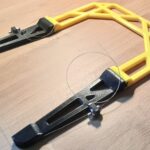
For professionals, templates matched to specific concealed systems reduce uncertainty during installation. For homeowners, the practical lesson is simple: do not treat these details as decorative add-ons. Include them in the construction scope, provide the installer with exact product specifications, and confirm placement before waterproofing and tile setting begin.
PS-Tile focuses on these integrated details because the finished bathroom is shaped by the elements that are usually overlooked. A concealed brush holder or recessed bin may be small, yet it can protect the clean visual language of the entire room.
A quieter bathroom is easier to live with
The most successful bathroom accessories do not ask for attention every time the door opens. They keep the essentials close, simplify cleaning, and allow the tile, light, and proportions of the room to remain visible.
Before finalizing a renovation, stand in the plan and ask a practical question: where will every daily object go? If the answer is a collection of freestanding holders, bins, and hooks added later, the design is not finished yet. Build those functions into the room from the start, and the bathroom will feel clean, elegant, and considered for years to come.