A toilet paper holder that projects from the wall, a brush set standing beside the toilet, a small waste bin with no permanent place – these are familiar details, but they can disrupt an otherwise carefully designed bathroom. The choice between recessed versus surface accessories determines whether functional equipment remains visible or becomes a quiet part of the architecture. For a bathroom built around clean tile lines, that distinction is not minor.
Surface-mounted accessories are quick to add and easy to replace. Recessed accessories require planning before the tile is installed, but they create a more elegant, spacious result with fewer visual interruptions. The right decision depends on the wall construction, renovation scope, daily use, and the level of finish you expect from the room.
Recessed versus surface accessories: the essential difference
Surface accessories are fixed onto the finished wall. A towel hook, toilet paper holder, shelf, soap dispenser, or waste bin sits in front of the tile and remains clearly visible. This approach is common because installation can happen after the bathroom is complete. It is practical for small updates, rental properties, and projects where opening a wall is not possible.
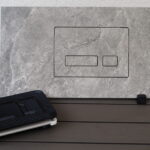
Recessed accessories are integrated into the wall cavity or installed beneath the tile surface. Their functional part is accessible, but their housing is concealed. A built-in toilet brush, hidden toilet paper holder, flush-mounted waste bin, or recessed flush plate becomes part of the wall composition rather than an object added to it.
The visual difference is immediate. Surface-mounted products create shadows, projections, mounting points, and gaps around their edges. Recessed solutions preserve the continuity of the tile. In a minimal bathroom, that continuity creates a cleaner and more luxurious impression.
Why surface-mounted accessories still make sense
Surface-mounted accessories are not automatically the wrong choice. They solve a real need when time, budget, or building conditions limit what can be done behind the wall. A simple hook can be placed exactly where it is needed after the room is already in use. A surface toilet paper holder can be changed later if the layout evolves.
They are also useful where the wall is solid concrete, where plumbing or electrical routes make recessing difficult, or where the renovation is limited to replacing fixtures and finishes. Installation usually requires only accurate drilling, suitable anchors, and attention to the tile surface.
The trade-off is that every mounted element adds volume to the room. In a generous bathroom, this may not matter. In a compact guest bath or narrow toilet room, a projecting holder or bin can make circulation feel tighter. Surface accessories also create narrow joints and contact areas that collect dust, soap residue, and moisture over time.
A surface-mounted accessory works best when it is intentionally selected as a visible design object. If it is meant to disappear, the wall-mounted format is working against the desired result.
What recessed accessories change in the bathroom
Recessed accessories move everyday functions into the wall, freeing the visible space around the toilet, vanity, and shower. This is especially valuable in bathrooms where every inch matters. A built-in waste bin does not occupy floor space. A concealed toilet brush does not stand beside the toilet. A recessed paper holder removes a protruding metal arm from the wall.
The benefit is not only aesthetic. When fewer objects extend into the room, cleaning becomes more direct. There are fewer bases on the floor, fewer edges behind accessories, and fewer awkward gaps between the wall and the product. A clean wall plane supports a cleaner routine.
For architects and designers, recessed components also offer greater control over visual rhythm. Tile joints, niches, flush plates, and accessories can be aligned with purpose. Instead of treating bathroom hardware as an afterthought, it becomes a coordinated part of the layout.
This does not mean every accessory must be concealed. A towel rail may remain visible because it needs reach and airflow. The strongest interiors often combine both approaches: recessed solutions for items that create clutter and carefully selected surface pieces where visibility improves function.
The installation question: plan before tile
The main difference between the two options is timing. Surface accessories can be installed late in the project. Recessed accessories need to be specified while walls are being prepared and before tile is set.
That early planning should include the wall type, cavity depth, waterproofing system, plumbing routes, and the tile module. The position of a built-in toilet brush or paper holder should be comfortable from the seated position without interfering with a concealed cistern, electrical box, or structural element. A recessed waste bin should be placed where it can be used naturally and emptied without obstruction.
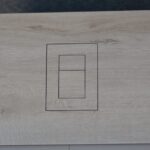
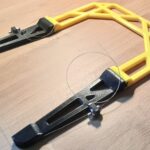
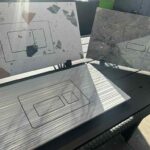
Precision matters at the tile stage. The opening must be clean, correctly sized, and aligned. This is where templates, accurate cutting tools, and professional installation practice protect the final result. A recessed accessory is most convincing when it looks as though the wall was designed around it from the beginning.
Compatibility also deserves attention. Flush-mounted details near concealed toilet systems must work with the selected installation frame and flush plate. Products designed for modern wall assemblies simplify this coordination, but the dimensions should always be confirmed before construction begins.
Cost: initial budget versus finished value
Surface-mounted accessories generally cost less to install because they do not require wall preparation, precise cutouts, or coordination with tile work. If the objective is a fast refresh, that can be the sensible choice.
Recessed accessories involve higher planning and installation effort. The investment is not only in the component itself, but also in the labor required to prepare, waterproof, tile, and finish the opening accurately. For a full renovation or new build, however, this work is usually far more efficient when included in the original scope than added later.
The value appears in the completed room. A bathroom with fewer visible objects feels more intentional, easier to maintain, and more architecturally resolved. In premium homes, apartments, hospitality spaces, and high-use family bathrooms, that level of finish can justify the additional preparation.
Where each approach performs best
Recessed accessories are particularly effective around the toilet. This is the area where a brush, paper storage, waste bin, and flush control can easily create visual noise. Integrating selected elements into the wall leaves the floor clear and gives the toilet zone a calm, orderly appearance.
They also work well in smaller bathrooms where standard accessories compete for limited wall and floor space. A concealed element can create room for movement without requiring the room to become larger.
Surface accessories remain practical in spaces that are already finished, in temporary renovations, or where access behind the wall is unavailable. They can also suit styles that deliberately feature hardware, such as industrial or traditional interiors. The key is consistency. A polished, minimal tile wall paired with a collection of unrelated projecting accessories often feels unfinished rather than expressive.
A better way to make the decision
Before choosing accessories, assess the bathroom as a complete system rather than a series of individual purchases. Consider these four questions:
- Is the project a full renovation or a finished bathroom update?
- Can the wall safely accommodate recessed housings and required waterproofing?
- Which daily-use items create the most clutter around the toilet and vanity?
- Is the goal a visible hardware style or a quiet, integrated wall surface?
If the project is already tiled and functional, high-quality surface accessories may be the practical route. If walls are open and the objective is a refined, long-lasting bathroom with clean lines, recessed details offer a stronger result.
PS-Tile focuses on the details that are often left until the end of a bathroom project, even though they have a major effect on how the room looks and works every day. Built-in accessories turn necessary objects into discreet architectural elements, while precision tools and templates support a finish that respects the tile, the wall, and the design.
The most successful bathroom is not the one with the fewest functions. It is the one where every function has a considered place. When accessories stop competing for attention, the tile, light, space, and craftsmanship can do the talking.