A bathroom can have beautiful tile, refined fixtures, and generous natural light, yet still feel crowded because of a few ordinary objects. A toilet brush beside the toilet, a visible trash can, a paper holder projecting from the wall, and towels stacked on a bar all compete for attention. Space saving bathroom accessories solve this problem at the source: they move necessary functions into the wall, under the tile, or into precisely planned recesses.
The result is not simply more open floor area. It is a calmer, more hygienic room with clean lines and no distracting hardware. In a compact guest bathroom, that difference is immediate. In a large primary bathroom, it is what separates an expensive collection of finishes from a truly considered interior.
Why recessed details save more than square footage
Most bathrooms lose usable space in small increments. A freestanding waste bin occupies a corner. A standard toilet brush sits where it can collect dust and splashes. Surface-mounted hooks, holders, and shelves create projections that interrupt movement and make narrow rooms feel tighter than they are.
Recessed accessories use the depth already available inside a partition wall. When integrated correctly, they provide the same daily function without claiming visual or physical space in front of the tile. This is particularly valuable near a wall-hung toilet, where every visible detail is exposed and easy to notice.
There is also a cleaning advantage. Fewer objects standing on the floor means fewer edges to move around when mopping. Fewer brackets and containers mounted on the surface mean fewer small gaps where moisture, limescale, and dust can settle. Minimalism in a bathroom should never be only decorative. Its value is in making the room easier to use and easier to maintain.
The space saving bathroom accessories worth planning early
The most effective accessories are not additions chosen after the tile is complete. They are components of the wall assembly. Their placement should be decided alongside the concealed cistern, electrical points, tile layout, niches, and access requirements.
Built-in toilet brush holders
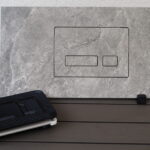
A concealed toilet brush holder removes one of the most visually disruptive items in the room. Instead of placing a plastic container beside the toilet, the brush is stored in a recessed housing integrated beneath the tile surface. Only the discreet opening and handle remain visible.
This creates a cleaner toilet zone and eliminates the awkward floor-level object that is difficult to clean around. It is especially effective in powder rooms and compact bathrooms, where the toilet is often the first element guests see.
Placement matters. The holder should be easy to reach while remaining outside the primary sightline from the doorway. A skilled installer will also align it with grout joints or a deliberate tile cut so the finished detail feels architectural rather than added later.
Recessed waste bins
A waste bin is necessary, but it does not need to look like a freestanding accessory. A built-in waste bin keeps tissues, packaging, and small daily waste contained inside the wall. The floor remains clear, and the bathroom retains a more elegant, hotel-like character.
This choice works well near the vanity or toilet, depending on how the room is used. In a family bathroom, capacity may be the deciding factor. In a guest bathroom, a smaller concealed bin often provides the right balance of function and visual restraint. The key is to plan a location that is convenient without competing with vanity storage or access to plumbing.
Concealed toilet paper holders
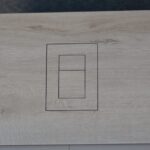
A standard paper holder may only project a few inches, but in a narrow toilet room, those inches matter. More importantly, it adds another visible metal element to the wall. A recessed toilet paper holder stores the roll within the wall plane, leaving the tile surface clean and uninterrupted.
It is a subtle upgrade with a strong visual effect. When paired with a concealed brush holder and flush plate, the entire toilet area reads as one composed surface rather than a collection of separate accessories.
There is one practical trade-off: recessed holders require enough wall depth and careful coordination with the concealed toilet frame, pipes, and studs. They are ideal during a renovation or new build, but they are not always suitable for a thin existing partition. This is where accurate technical planning matters more than a last-minute design preference.
Flush-mounted towel hooks and rails
Towels need to dry properly, so not every towel solution should disappear completely. In a busy family bathroom, a generous heated rail or conventional bar may still be the best functional choice. But near the shower, vanity, or guest toilet, flush-mounted hooks can reduce clutter while keeping a hand towel exactly where it is needed.
Integrated hooks are particularly valuable in tight layouts, where protruding hardware can catch clothing or interrupt a passage. When folded into the wall plane, they preserve a clean surface without sacrificing everyday convenience. Their restrained appearance also allows the tile, stone, or microcement finish to remain the central visual element.
Treat the wall as functional architecture
The best compact bathrooms do not rely on more storage baskets or smaller accessories. They assign each function a permanent place. The wall becomes an organized system for cleaning tools, paper, waste, towels, and controls.
This approach is especially effective when designing around large-format tile. A continuous tiled plane can make a modest room feel wider and more composed, but only if the accessories do not fragment it. Recessed components protect that continuity. Their visible parts become precise details rather than clutter.
For architects and designers, this also creates better visual discipline. Finishes can be selected with confidence because fewer unrelated materials are introduced after completion. For homeowners, the benefit is simpler: the bathroom continues to look finished even on an ordinary weekday, not only after everything has been put away for photographs.
Precision during installation determines the final effect
Built-in accessories demand more planning than surface-mounted products, but the finished result justifies that effort. The installer must confirm wall depth, structural conditions, plumbing routes, and compatibility with the concealed cistern or carrier system. Tile thickness, adhesive buildup, and the final wall plane must also be calculated before the opening is cut.
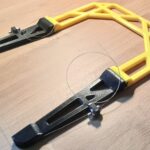
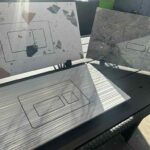
Templates designed for common concealed systems help position openings accurately. They reduce guesswork and protect the alignment between functional components and the tile composition. Precision cutting tools also matter. A poorly cut opening can undermine an otherwise premium bathroom, while a clean, exact edge makes the accessory appear to belong to the wall from the beginning.
Do not place every recessed element at the same height simply for symmetry. The right height depends on reach, room proportions, the toilet seat, vanity, and adjacent fittings. A toilet paper holder should be effortless to use from a seated position. A waste bin should open comfortably without forcing the user to bend into a tight corner. These are small decisions, but they define whether luxury is genuinely functional.
Choose fewer accessories, but choose them deliberately
The goal is not to conceal everything. A bathroom still needs intuitive use, appropriate storage, ventilation, and room for towels. A recessed accessory should earn its place by improving circulation, hygiene, or visual order.
Start with the objects that usually live on the floor or project into the room. The toilet brush and waste bin are often the highest-impact upgrades. Then assess the paper holder, towel hooks, and flush controls as part of one coordinated wall. This sequence avoids overdesign while delivering a much cleaner result.
For a renovation, make these choices before waterproofing and tile installation. For a new build, include them in the earliest bathroom drawings, alongside plumbing and framing. Products from specialists such as PS-Tile are designed for this level of integration, where technical accuracy and a premium finish are inseparable.
A well-designed bathroom does not ask for attention through more objects. It creates room to breathe by giving every necessary function a discreet, exact place. Plan the details inside the wall, and the finished room will feel larger, cleaner, and more elegant every day.