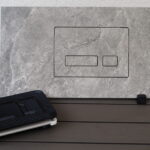
The toilet wall is often where a carefully designed bathroom loses its discipline. A visible plastic plate in the wrong color, an oversized frame, or a poor alignment with the tile joints can interrupt an otherwise clean composition. Flush plates are small components, but they sit at eye level and are used every day. Selecting them with the same care as tile, faucets, and lighting is what turns a concealed cistern into a refined architectural detail.
For a modern bathroom, the goal is not simply to hide the tank. It is to create a WC wall with calm proportions, practical access, and no unnecessary visual noise. The right plate supports that result while remaining comfortable to use and easy to maintain.
Why flush plates matter in a minimalist bathroom
A concealed cistern removes the tank from view, freeing the wall from one of the room’s largest visual distractions. The flush plate becomes the visible interface of that system. It is the one element that confirms where the technology is located, so its scale, finish, and placement deserve attention.
In a minimal interior, every exposed item has more presence. A chrome plate can look intentional when it relates to chrome faucets, shower controls, and accessories. A matte black plate can establish a sharper, more graphic contrast against pale stone-look tile. A plate finished to coordinate with the wall can make the control nearly disappear, preserving uninterrupted lines.
This is not only a matter of luxury. A thoughtfully selected flush plate keeps the WC zone easier to read. The user sees a clear control surface, while the wall remains organized rather than crowded with separate objects, trim rings, shelves, and exposed accessories.
Start with the concealed cistern, not the finish
The most common mistake is choosing a plate for its appearance before confirming the flushing system behind the wall. Flush plates are not universal covers. Their mounting dimensions, operating mechanism, and service opening must match the concealed cistern or installation frame.
Systems from manufacturers such as Geberit and Grohe use their own compatible plate ranges and actuation arrangements. Before ordering, confirm the exact cistern series, the installation depth, and whether the system uses mechanical, pneumatic, or electronic actuation. This is particularly important in renovation work, where the frame may already be installed and its model is not always obvious after tiling.
Compatibility should also shape the construction sequence. The rough-in frame, protective cover, tile thickness, and final plate all need to work as one assembly. A plate that sits too far proud of the wall can look unfinished. One installed too deeply may be difficult to operate or remove for servicing.
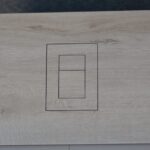
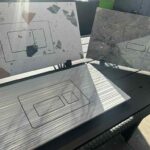
For professional installers, accurate templates make this stage more controlled. A dedicated template helps position the tile opening cleanly around the service access area, reducing improvised cuts and avoiding chipped edges around a highly visible detail. Precision at the wall stage is what allows the finished plate to look intentionally integrated rather than added at the end.
Choose a finish that belongs to the room
The finish should not compete with the tile. It should either connect to another visible metal element or become discreet enough to let the wall lead. There is no single best choice, because the right answer depends on the bathroom’s material palette and the level of contrast you want.
Brushed metal for a restrained premium look
Brushed stainless steel, brushed nickel, and similar satin finishes suit bathrooms with warm gray, stone, concrete, or natural-look surfaces. They reflect less light than polished chrome, which makes fingerprints and water marks less noticeable. Their quieter sheen also feels more architectural, especially when paired with matching shower fixtures or towel hooks.
Matte black for deliberate contrast
Black flush plates create a clean focal point on light tile and work particularly well in bathrooms that repeat black in faucets, shower frames, lighting, or hardware. They need a disciplined approach. A single black plate can feel disconnected if every other detail is chrome. Repeating the finish in at least a few carefully chosen elements gives the room a cohesive structure.
Tile-integrated or color-matched options for quiet walls
When the intention is to minimize visible hardware, a recessed or tile-integrated solution can be the strongest choice. It allows the wall finish to remain the dominant surface, with only the functional lines of the control visible. This approach is especially effective in compact bathrooms, spa-inspired spaces, and premium interiors where visual calm matters more than decorative contrast.
The trade-off is installation precision. Tile-integrated details require a careful cut, consistent grout lines, and attention to the thickness and behavior of the selected tile. Large-format porcelain, textured material, and natural stone can all be used, but each demands a different cutting and handling approach.
Dual flush function should feel effortless
Most contemporary flush plates provide dual-flush operation: a smaller flush for liquid waste and a larger flush for solid waste. The water-saving advantage is familiar, but the physical experience still matters. Buttons should be easy to identify and comfortable to press without excessive force.
A wide, well-defined actuator is often more practical than very small buttons, especially in family homes or guest bathrooms. Touchless and electronic options can be useful where hygiene is the priority, but they introduce additional considerations such as power supply, sensor adjustment, and long-term service access. Mechanical dual-flush plates are usually the most straightforward solution for a residential bathroom that values dependable daily function.
Avoid choosing an ultra-minimal plate that makes operation unclear. The best designs look quiet without becoming confusing. A guest should understand how to flush immediately, even if the control is nearly integrated into the tile.
Placement and tile alignment create the finished effect
The plate is usually centered above the toilet, but visual centering is not always the same as measuring from the room walls. On an asymmetrical layout, the most convincing position may be centered to the toilet axis, the tiled niche, or the width of the pre-wall installation. Decide which reference line governs the WC composition before the installer begins tile layout.
Grout joints deserve equal attention. A flush plate placed randomly across multiple joints can make the entire wall feel less precise. Whenever possible, plan the tile grid so the plate sits in a balanced field of tile or aligns with intentional joint lines. This is particularly noticeable with large-format panels, where a clean opening can look almost invisible, and with small tile, where an off-center cut is immediately visible.
The same logic applies to adjacent built-in accessories. A recessed toilet paper holder, concealed brush compartment, or integrated waste bin can create a complete service wall with no freestanding clutter. But each opening must be planned early. Adding multiple recessed elements after the framing and waterproofing stage is difficult, expensive, and likely to compromise the clean result.
Maintenance access is part of good design
A concealed cistern should never mean inaccessible plumbing. The flush plate normally provides access to the service opening behind it, allowing maintenance of the fill valve and flush valve without opening the tiled wall. This is why correct installation and compatible components are non-negotiable.
Choose a plate designed for repeated removal and refitting without damaging its finish or surrounding tile. During installation, keep the service area free of grout residue, adhesive buildup, and debris. Small construction shortcuts can become frustrating years later when a valve needs adjustment.
For cleaning, a soft cloth and a non-abrasive cleaner are generally sufficient. Highly aggressive descalers, scouring pads, and abrasive powders can dull satin metal finishes, scratch coated surfaces, or leave marks around buttons. The plate should be hygienic and simple to wipe, not another object with seams and edges that collect dirt.
A small detail with a permanent visual role
Flush plates are installed once but seen for years. Their value is not limited to activating the cistern. They define whether the toilet wall looks assembled from separate products or designed as one clean, functional surface.
At PS-Tile, the strongest bathroom results come from planning this detail alongside the tile layout and built-in accessories, not after the wall is finished. When the system, opening, finish, and alignment are resolved early, the plate becomes exactly what it should be: easy to use, easy to service, and free of visual distraction.
Before the first tile is cut, stand in front of the future WC wall and decide what should remain visible. That single decision will guide a bathroom toward either more clutter or a calmer, more elegant everyday experience.