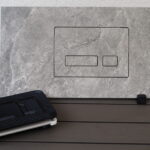
A bathroom can look carefully designed until the first bottle, spare roll, and cleaning product have nowhere discreet to go. The decision between wall niche versus cabinet storage determines more than capacity. It shapes how open the room feels, how easily it cleans, and whether the finished space reads as architectural or crowded.
A recessed wall niche keeps essential items within the surface of the wall. A cabinet adds enclosed volume in front of it. Neither option is universally better, but they solve very different problems. The strongest bathrooms use each one where its function makes sense, rather than asking a single storage solution to do everything.
Wall Niche Versus Cabinet Storage: The Core Difference
A wall niche is storage integrated into the wall cavity and finished in tile, stone, or another wall material. In a shower, it creates a dedicated place for shampoo and soap without a wire basket, corner shelf, or bottles lined along the tub edge. Near the toilet or vanity, a niche can hold paper, cosmetics, or small daily-use items while preserving a clean, flush surface.
Cabinet storage projects into the room or sits beneath a vanity. It offers a larger enclosed compartment, usually with doors or drawers. That enclosure is its greatest strength: visual order remains intact even when the contents are less than perfectly organized.
The difference is simple. A niche makes the wall work harder. A cabinet creates more usable volume. The right choice depends on what needs to be stored, where it will be used, and how much visual calm the room requires.
When a Wall Niche Is the Better Choice
A wall niche is most convincing when the items are used frequently and should be easy to reach. In a walk-in shower, it removes the need for add-on organizers that interrupt the tile layout and collect residue around their fittings. The bottles appear intentional rather than temporary.
It is also a strong choice in compact bathrooms. A recessed toilet-paper holder, built-in toilet brush, or integrated waste bin can replace multiple wall-mounted accessories. The floor stays clear, circulation remains comfortable, and cleaning becomes easier because there are fewer objects around the base of the toilet or vanity.
It preserves clean lines
For a minimalist bathroom, the visual advantage is immediate. A niche follows the plane of the wall instead of casting a shadow into the room. When its tile alignment, grout joints, and trim are planned precisely, it becomes part of the architecture rather than an accessory added after the fact.
This matters especially with large-format tile. A random shelf, bulky cabinet, or exposed holder can break an otherwise continuous surface. A carefully positioned niche can work with the tile module and make the finish appear more considered.
It improves daily hygiene
Wall-mounted baskets and freestanding accessories create narrow areas that are awkward to wipe around. A properly detailed recessed element eliminates many of these problem zones. In the shower, a niche with a slight slope toward the drain helps prevent standing water. Outside the shower, integrated accessories reduce the collection of dust and moisture around brackets, legs, and bases.
A niche is not maintenance-free. Grout joints and the niche base still need regular cleaning, particularly in hard-water areas. But the surface is open, visible, and accessible, which is usually preferable to cleaning around several separate pieces of hardware.
It works best for limited, curated storage
A niche is not a substitute for a linen closet. Its depth is limited by the wall construction, plumbing routes, and structural conditions. That limitation is often beneficial: it encourages storage of only what belongs in the immediate zone.
In a shower, that may mean two or three bottles and a bar of soap. At the toilet, it may mean a concealed paper reserve and a discreet brush. Near the vanity, it may mean daily skincare rather than every backup product in the household.
Where Cabinet Storage Has the Advantage
Cabinets are still essential when storage must be deep, flexible, and forgiving. Towels, hair tools, cleaning supplies, extra toiletries, first-aid items, and bulk purchases need more volume than a recessed wall can provide.
A vanity cabinet is particularly practical because it turns the volume below the sink into enclosed storage. Drawers can organize smaller items far better than an open niche, and doors conceal visual clutter instantly. In a family bathroom, this capacity often matters more than the appearance of a completely bare wall.
Cabinets hide what should not be on display
Not every bathroom item deserves a place in the visual composition. Electric toothbrush chargers, razors, medication, spare products, and cleaning supplies are better behind a door. Cabinet storage gives the room a calm appearance without demanding perfect organization every day.
This is where open niches can disappoint. A niche filled with mismatched packaging, half-used products, and loose items quickly loses its luxury effect. If the contents will be visually busy, closed storage is usually the more elegant decision.
They offer more flexibility after installation
A cabinet can be replaced, reconfigured, or upgraded with relatively little disruption. A wall niche is built into the finished wall. Changing its dimensions later may require removing tile, waterproofing, and part of the wall assembly.
For homeowners who expect their storage needs to change, a generous vanity cabinet is the safer long-term foundation. Use niches for fixed, predictable routines rather than as the only source of storage.
Construction Decides What Is Possible
The best design can fail if the wall has not been evaluated before tile work begins. A recessed niche needs adequate cavity depth and must avoid plumbing, electrical wiring, structural studs, and other services. Exterior walls can be particularly challenging because insulation and vapor control may limit the available space.
Shower niches require even more precision. The waterproofing system must continue fully around the opening, every internal corner must be sealed correctly, and the bottom surface must slope toward the shower. A beautiful tile detail is not worth the risk of moisture entering the wall.
For this reason, the niche location should be decided early – before framing, rough plumbing, and tile layout are finalized. It should not be treated as a last-minute cutout. Professionals benefit from working with exact component dimensions and installation templates so the finished opening is clean, centered, and compatible with the selected system.
Cabinets have their own planning requirements. Confirm door swing, drawer clearance, ventilation around appliances, and the walking space in front of the vanity. In a narrow bathroom, even a shallow cabinet can make the room feel constrained. Wall-hung vanities often offer a better balance, exposing more floor while still delivering substantial enclosed storage.
A Better Approach: Divide Storage by Use
The most functional bathroom rarely chooses only one solution. It assigns each type of storage a clear role.
Use recessed niches and integrated accessories for items used at the point of use: shower products in the shower, a brush near the toilet, towels near the shower exit, or toilet paper where it is needed. These details keep necessities close while removing visual noise.
Use cabinets for reserve stock and private items: spare towels, backup cosmetics, appliances, medication, and cleaning products. This division makes daily routines more efficient and protects the refined visual effect of the bathroom.
In a premium renovation, the difference is felt as much as it is seen. Nothing sits on the floor without a reason. Nothing interrupts the wall without a purpose. Every item has a defined place.
How to Choose for Your Bathroom
Choose a wall niche when you want to save floor space, preserve continuous tile surfaces, and store a small number of items within reach. It is ideal for showers, toilet zones, and compact bathrooms where every projecting accessory makes the room feel smaller.
Choose cabinet storage when you need depth, concealed capacity, and flexibility. It is the better solution for busy households, shared bathrooms, and anyone who wants to keep daily visual order without displaying every product.
If you are planning a new bathroom from the wall inward, prioritize the integrated details first. A recessed brush holder, concealed waste bin, or tiled shower niche must be coordinated with construction and tile work. A cabinet can be selected later. That sequence protects the details that create the cleanest, most elegant result.
A well-designed bathroom does not eliminate storage. It makes storage quiet. When the wall handles the essentials and the cabinet handles the volume, the room stays functional without surrendering its clean, luxurious character.