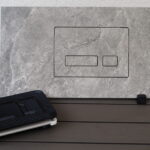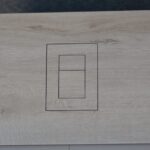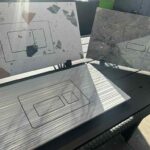
A premium bathroom can lose its precision quickly when toilet paper holders, brushes, waste bins, and hooks are added as visible afterthoughts. Waterproof concealed accessory frames solve that problem at the wall level. They create a prepared, protected opening for an accessory that sits flush with the tile surface, leaving the room clean, elegant, and free from visual clutter.
The result is not simply a hidden bathroom accessory. It is a more considered wall assembly – one that combines waterproofing, precise tile work, hygiene, and the quiet luxury of integrated design.
What waterproof concealed accessory frames do
A concealed accessory frame is the structural element that defines and supports a recessed bathroom detail. Depending on the application, it may accommodate a built-in toilet brush, toilet paper holder, waste bin, towel hook, or flush plate. Instead of mounting the accessory over finished tile, the frame is integrated into the wall before tiling begins.
The waterproof function matters because every recess interrupts the continuity of a tiled wall. Bathrooms are exposed to humidity, splash water, cleaning products, and repeated daily use. A properly designed frame helps create a controlled transition between the wall’s waterproofing layer, the tile finish, and the built-in accessory.
This distinction is essential: a waterproof frame does not replace the bathroom waterproofing system. It must be installed as part of it. The membrane, sealing components, adhesive, grout, and final detailing must work together so moisture cannot reach vulnerable areas behind the tile.
When specified and installed correctly, the visible result is deliberately quiet. The tile remains the dominant surface. The accessory appears only where it is needed.
Why concealed frames change the bathroom visually
Traditional accessories are functional, but they often add layers to a small room. A wall-mounted holder projects from the surface. A freestanding brush occupies floor space. A small waste bin becomes another object to clean around. Each item can be useful on its own, yet together they make the bathroom feel less composed.
A recessed solution brings these functions into the architecture. The wall becomes more useful without becoming busier. This is especially valuable in compact powder rooms, narrow guest bathrooms, and shower-adjacent spaces where every clear inch has visual and practical value.
The design advantage is strongest when the frame is tiled to align with the surrounding layout. Clean grout lines, balanced cuts, and a flush border make the opening feel intentional rather than improvised. In a minimalist bathroom, this level of alignment is what separates a refined installation from a merely modern one.
There is also a practical benefit. Fewer protruding accessories mean fewer edges to catch clothing, collect dust, or interrupt cleaning. The floor remains clearer, and the bathroom feels easier to maintain.
Waterproofing is a system, not a label
The word waterproof is often treated as a product feature. In tile construction, it is a process. Even a precisely manufactured accessory frame can underperform if the surrounding wall is not prepared correctly.
Start with the right wall location
Not every wall can accept a recessed accessory without planning. Stud depth, plumbing routes, electrical wiring, load-bearing conditions, and flush plate systems all influence what is possible. A shallow partition may require a specially designed solution, while a solid wall may need careful recessing before the frame is installed.
The placement also matters. A concealed toilet brush or waste bin should be convenient to use without conflicting with the toilet, door swing, vanity, or circulation route. For a towel hook, reach and mounting height matter as much as the visual alignment.
Connect the frame to the waterproof layer
The installer should treat the frame perimeter as a critical junction. The waterproof membrane needs to be properly bonded and sealed to the compatible transition area around the frame. Corners, edges, and penetrations deserve particular attention because these are the locations where installation shortcuts can create future problems.
Product compatibility should never be assumed. Waterproofing systems have specific installation requirements, including primers, sealing tapes, collars, and adhesives. Use components approved for the selected membrane system and follow the technical instructions for both the frame and the waterproofing materials.
Finish the tile edge with precision
Tile work around a recessed opening is highly visible. Uneven cuts, inconsistent joints, or poorly chosen silicone can make even an expensive accessory look unfinished. The frame should be installed square and level before the tile setter begins, with the final tile thickness considered from the start.
For large-format porcelain, stone, or strongly veined slabs, planning the cut layout in advance is particularly important. The tile should appear continuous, while the functional opening remains crisp and accessible.
Where built-in frames deliver the most value
The best application depends on the room and the user’s habits. In a small toilet room, a concealed toilet paper holder and brush set can eliminate much of the usual visual noise around the fixture. In a family bathroom, a recessed waste bin keeps disposable items off the floor and out of sight while remaining easy to access.
Near the vanity, built-in hooks can replace visible rails or adhesive hardware. In a shower area, only use recessed accessories that are explicitly designed for wet-zone conditions and are correctly integrated with the waterproofing system. A frame intended for a dry wall location is not automatically suitable inside a shower enclosure.
Flush plates are another important example. A recessed or tile-integrated flush plate can reduce the visual separation between the concealed cistern wall and the rest of the tile composition. It works best when the compatible carrier system, access requirements, and tile thickness have been coordinated before construction.
PS-Tile focuses on these details because they are not decorative extras. They are the small architectural decisions that make a bathroom feel clean, organized, and complete.
Planning details professionals should confirm early
Concealed accessories should be selected before the wall is closed, not after the tile has been chosen. Architects, designers, installers, and homeowners benefit from making a few decisions early: the exact accessory model, wall construction, waterproofing system, tile thickness, tile module, and final mounting height.
Templates can make a major difference when openings must align with concealed systems such as toilet carriers or flush mechanisms. They reduce guesswork, support accurate cutting, and help preserve the geometry that a minimalist finish depends on. The same principle applies to quality cutting tools: a clean opening is easier to waterproof, tile, and finish accurately.
Maintenance access also needs consideration. A well-designed concealed accessory looks minimal on the outside, but it should remain practical to empty, clean, replace, or service. Hidden should never mean inconvenient.
The trade-off: more planning for a better finish
Concealed frames require earlier coordination than surface-mounted accessories. They can involve more detailed wall preparation, more precise tile cutting, and greater reliance on qualified installation. That is the trade-off.
For a quick cosmetic refresh, visible accessories may be the sensible choice. For a renovation or new build where walls are already open, integrated frames offer a far stronger long-term result. They protect the visual discipline of the room and remove many of the objects that make a bathroom feel crowded.
Cost also depends on the accessory type, wall structure, waterproofing requirements, and tile complexity. A simple recessed holder is not the same project as a fully coordinated wall with a concealed cistern, tiled flush plate, built-in brush, and integrated waste bin. The value comes from choosing the details that have the biggest effect on daily use and visual calm.
A clean wall is easier to live with
The strongest bathrooms do not rely on more visible features. They rely on better decisions beneath the surface. Waterproof concealed accessory frames allow essential functions to sit within the wall, where they support hygiene, save space, and preserve clean lines.
Before tile is ordered or walls are closed, map the accessories that usually create clutter. That single planning step can turn a standard tiled room into a more elegant, functional space that continues to feel considered years after installation.