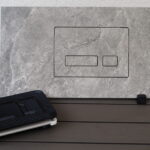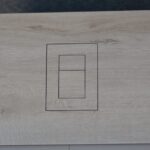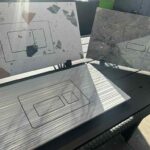
A wall-hung toilet and large-format tile can make a bathroom feel architecturally calm – until a plastic toilet brush, exposed paper holder, and small trash can interrupt every clean line. Tileable fixtures solve this contradiction by placing the accessories used every day inside the wall and finishing them in the same tile as the room. What remains visible is deliberate: a precise reveal, a discreet opening, or a flush panel that belongs to the architecture rather than competing with it.
For a bathroom designed to feel clean, elegant, and long-lasting, these details are not afterthoughts. They define how the room functions after installation, when towels are hung, paper is replaced, and surfaces are cleaned every week.
What Are Tileable Fixtures?
Tileable fixtures are built-in bathroom components designed to receive the same tile used on the surrounding wall. Their frame and functional mechanism are concealed behind the finish, while the tile-faced door, lid, or panel remains accessible. The result is an integrated detail with a consistent material surface.
The term can describe several types of recessed bathroom accessories: concealed toilet paper holders, built-in toilet brush modules, recessed waste bins, tile-in flush plates, and wall-integrated towel hooks. Each solves a familiar problem. Standard accessories sit on the floor, project from the wall, collect dust around their edges, or introduce finishes that do not belong with the chosen tile, faucet, and sanitaryware.
A tileable element does not make the bathroom less functional. It makes function less visually intrusive. That distinction matters in a compact powder room as much as in a large primary bathroom. When the essentials have a dedicated place within the wall, the floor stays open and the room reads as one composed surface.
Why Tileable Fixtures Change the Finished Space
The strongest benefit is visual order. A tiled wall remains a tiled wall, rather than becoming a collection of mounted accessories. This is particularly valuable with stone-look porcelain, concrete finishes, microcement-look tile, and large formats where every interruption is immediately noticeable.
There is also a practical advantage. A recessed toilet brush or waste bin removes an object from the floor, where it would otherwise create an awkward cleaning zone. A concealed paper holder prevents loose rolls from becoming part of the visual scene. Integrated hooks provide a reliable place for towels without adding a row of protruding hardware.
Space savings are real, but they should be understood correctly. Tileable fixtures do not create extra square footage. They recover the usable visual and physical space that freestanding accessories occupy. In a narrow toilet room, moving a brush and waste bin into the wall can improve circulation and make cleaning easier. In a generous bathroom, the same move preserves the quiet, luxurious character that the larger layout was designed to achieve.
Hygiene is another reason to build accessories in. Fewer objects on the floor mean fewer places where dust, moisture, and cleaning residue can collect. A properly designed recessed module keeps its functional part accessible while reducing exposed edges and unnecessary surfaces.
The Right Places for Tileable Bathroom Fixtures
The wall beside the toilet is usually the most valuable location. It already supports daily routines, so it is a natural position for a concealed toilet paper holder, integrated brush, and recessed waste bin. These components can be arranged to suit the user while maintaining a balanced elevation and comfortable reach.
A tile-in flush plate is especially effective when combined with a concealed cistern. Instead of placing a contrasting chrome or plastic plate at the center of the wall, the control becomes part of the tile composition. The mechanism remains accessible, but the visual focus stays on the material and the precision of the installation.
Towel hooks deserve the same attention. A surface-mounted hook may be small, yet several of them quickly create visual noise. Recessed or tile-integrated hooks retain their function with a cleaner profile. They work well near a shower exit, beside a vanity, or in a guest bathroom where every inch must earn its place.
Placement should follow use, not only symmetry. A paper holder must be reachable from a seated position. A brush module needs a comfortable grip and enough clearance for removal. A waste bin should open without conflicting with the toilet, vanity, or door swing. The most elegant installation is one that feels obvious in use because it was planned before the wall was closed.
Design Tileable Fixtures Before Tile Layout
Tileable fixtures are precision components. Their success depends on decisions made during design and rough-in, not after the tiler has started setting tile. Wall depth, stud locations, plumbing routes, cistern service access, and electrical runs all need to be coordinated early.
Start with the tile module. Measure the actual tile, including the intended grout joint, and plan where the fixture perimeter will land. Large-format tile gives an exceptionally clean effect, but it requires careful cutting and alignment. Small mosaic or heavily patterned tile can also work, although the opening may become more visible if the pattern cannot continue naturally across a removable panel.
The orientation of the tile matters as well. A stone-look vein, directional texture, or repeated graphic should be considered across the fixture face and surrounding wall. A door or panel should not look like a random patch. It should read as a controlled part of the composition.
For professional results, confirm the exact installation dimensions of every component before framing. Templates made for specific concealed systems, along with accurate cutting tools, help maintain the tolerances that tile-in details require. This is not an area for approximate measurements. A few millimeters can affect a flush reveal, tile joint alignment, or the movement of an access door.
Choosing the Fixture Type for Your Bathroom
Not every built-in accessory is necessary in every project. The right selection depends on the room, the users, and the desired level of integration.
A concealed brush module is ideal when a freestanding brush feels unhygienic or visually out of place. A recessed waste bin is especially useful in a powder room, where there may be no vanity cabinet for small disposables. A hidden paper holder creates a calm wall around the toilet, while a tile-in flush solution is a strong choice for bathrooms built around minimalism and continuous surfaces.
There are trade-offs. Built-in components require wall cavity space and earlier coordination than surface-mounted hardware. They can increase installation complexity, particularly during a renovation with limited wall depth or existing plumbing. Access must always be preserved for any mechanism or container that requires servicing.
That does not mean tileable fixtures are only for new construction. During a complete remodel, opening the wall creates the opportunity to design these details correctly. In a more limited refresh, a recessed solution may not be feasible in every location. The right approach is to integrate the elements that bring the most practical and visual value rather than forcing every accessory into the wall.
Details That Separate a Premium Installation
The luxury of a tileable fixture is not simply that it is hidden. It is that the finished detail feels intentional from every angle. Even grout joints, consistent reveals, level alignment, and a panel that opens cleanly all contribute to the result.
Choose materials suited to a wet environment and mechanisms built for repeated use. The visible tile may be the design statement, but the concealed frame, hinges, catches, and service access determine whether that statement remains functional for years. A premium bathroom cannot rely on appearance alone.
Tile selection also affects maintenance. Highly textured surfaces may look striking, but smoother porcelain around touchpoints is generally easier to wipe down. Very light grout can emphasize every joint around an opening, while a carefully selected tone can make the detail quieter. These choices are subtle, yet they influence whether the finished wall feels crisp or busy.
Installers benefit from receiving the fixture plan before waterproofing and tile cutting begin. Architects and designers benefit from drawing the wall elevation with real product dimensions instead of generic symbols. Homeowners benefit because costly changes are avoided once the tile has been installed.
A Bathroom That Stays Calm in Daily Use
The best bathroom details do not demand attention. They remove friction from the daily routine while protecting the clean lines that made the room feel special in the first place. Tileable fixtures bring the brush, bin, paper, hooks, and controls into a single architectural language: functional, hygienic, and free from unnecessary visual noise.
When planning your wall, reserve space for the objects that usually end up on the floor or mounted as an afterthought. That one decision can turn a beautifully tiled bathroom into a space that remains clean, ordered, and elegant long after the final grout line has cured.