A bathroom can have premium tile, refined lighting, and a carefully selected vanity, yet still feel visually crowded. The usual cause is not the large furniture. It is the small hardware mounted around the room: a toilet brush on the floor, a visible trash can, a protruding toilet paper holder, or towel hooks that interrupt an otherwise clean wall. Tile integrated fixtures address those details at their source by placing everyday functions within the tiled surface.
The result is not an empty bathroom. It is a bathroom where every necessary object has a defined place, and where the architecture remains visible. For homeowners planning a high-end renovation and professionals designing precise, modern interiors, integrated accessories are one of the most effective ways to turn a finished bathroom into a considered space.
What tile integrated fixtures change
Tile integrated fixtures are recessed components designed to be installed beneath or within tile. Their visible surfaces sit flush with the wall or remain deliberately minimal, while the functional part of the fixture is built into the wall cavity. Instead of adding accessories after tiling, these elements become part of the wall assembly.
This changes both appearance and use. A concealed toilet brush holder keeps the brush off the floor and out of immediate sight. A built-in waste bin removes the need for a freestanding container beside the toilet. A recessed paper holder eliminates a metal arm projecting into the room. Flush towel hooks and recessed flush plates preserve clean planes across the bathroom.
The value is especially clear in compact bathrooms, powder rooms, and guest bathrooms, where every visible object has more visual weight. However, larger bathrooms benefit too. When the room has expansive tile walls, a floating vanity, or a walk-in shower, surface-mounted accessories can dilute the calm and luxurious effect of the architecture.
A clean line is also a practical decision
Minimalism in a bathroom should not mean sacrificing daily function. It should mean giving every function a better location. Tile integrated fixtures reduce the number of objects sitting on the floor, collecting dust behind them, or creating awkward corners around wall-mounted hardware.
A freestanding toilet brush holder is a familiar example. It occupies floor space, is difficult to clean around, and often becomes the one object people would rather not see. A recessed holder places it inside the wall, where it remains accessible but no longer competes with the rest of the room. The same principle applies to a built-in trash bin. It keeps small waste contained in a dedicated, discreet location rather than leaving a loose container exposed beside the toilet.
The cleaning benefit is real, but it depends on correct selection and installation. Integrated components should have accessible openings, durable surfaces, and sensible dimensions for their purpose. A hidden detail is only successful when it remains easy to use every day. Premium bathroom design is not about hiding problems. It is about resolving them before they become visible.
The fixtures that make the biggest visual difference
Not every accessory needs to disappear into the wall. The most effective approach is to integrate the elements that create clutter, take up floor space, or disrupt the tile layout most noticeably.
Recessed toilet brush holders
A built-in toilet brush holder delivers one of the clearest upgrades in a modern toilet area. The brush is stored in a dedicated recessed unit rather than placed beside the toilet. This improves visual order and makes the floor easier to keep clean.
Placement matters. The holder should be within easy reach, but it should not interfere with the toilet, door swing, or circulation. On a small wall, exact alignment with grout lines and adjacent fixtures has a major impact on the final result.
Built-in waste bins
A recessed waste bin creates a more organized toilet area without adding another object to the floor. It is particularly useful in guest bathrooms and powder rooms, where a small trash can is necessary but rarely attractive.
The key is choosing a practical capacity and planning a comfortable access height. A bin that is too small will be inconvenient. One that is oversized for the wall cavity may require unnecessary structural changes. The best choice is proportional to the room and its expected use.
Concealed toilet paper holders
A recessed toilet paper holder is a quiet detail with a strong visual effect. Standard holders project from the wall and can feel especially intrusive in narrow toilet rooms. A built-in option keeps the paper accessible while maintaining a flat, elegant surface.
This detail works best when it is coordinated with the toilet frame, flush plate, and tile grid. It may seem minor in a drawing, but it is immediately noticeable in the finished space because it removes one of the most common visual interruptions from the wall.
Flush towel hooks and recessed flush plates
Towel hooks often become an afterthought, installed late and placed wherever there is an open piece of wall. Integrated or flush-mounted hooks provide a more intentional alternative. They offer the function needed near a shower or vanity without adding protruding hardware that breaks the line of the tile.
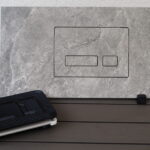
Recessed flush plates can deliver a similar result around a wall-hung toilet. When matched thoughtfully with the tile and installation system, they make the technical area feel composed rather than mechanical. The objective is not to make every component invisible. It is to ensure that each visible detail earns its place.
Plan tile integrated fixtures before the wall is closed
The best time to choose integrated bathroom accessories is during the design and rough-in phase, not after the tile has been installed. These fixtures need space inside the wall, accurate dimensions, and coordination with plumbing, electrical runs, toilet frames, waterproofing, and tile cuts.
For a homeowner, this means deciding early how the room will actually be used. Where will toilet paper be reached from? Is a built-in waste bin wanted near the toilet or vanity? Where should towels hang after a shower? These practical questions should be answered before the contractor closes the wall.
For architects, designers, and tile installers, the priority is precision. Confirm wall depth, framing conditions, available cavity space, and the compatibility of each component with the selected installation system. A recessed accessory should never conflict with pipework, structural elements, or a concealed cistern. The detail must be designed as part of the construction, not forced into a remaining gap.
Tile layout deserves the same attention. Centering a fixture on a tile, aligning it with joints, or deliberately positioning it between grout lines can make the installation look architectural. Poorly planned cuts around a recessed opening can make even a high-quality component appear improvised.
Precision tools protect the finished result
A clean integrated detail relies on accurate cutting and controlled installation. Openings for recessed fixtures need straight edges, correct corner treatment, and dimensions that respect both the product specification and the tile material. Large-format porcelain, natural stone, and thin slabs each require a different level of care.
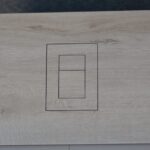
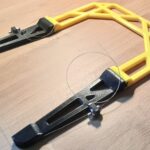
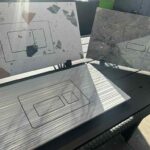
Professional templates for common concealed systems help position openings with confidence. Diamond blades, manual tile cutters, and precision tools are equally important when creating clean cuts for flush plates, hooks, and wall-mounted accessories. The right equipment reduces chipped edges, uneven joints, and expensive corrections once the tile is on the wall.
This is where the difference between an integrated concept and an integrated result becomes clear. The concept is simple: place the accessory inside the wall. The result depends on millimeter-level alignment, waterproofing discipline, and a tile installer who understands that the opening is a visible design feature.
Where integration may not be the right choice
Tile integrated fixtures are not automatically the best answer for every bathroom. In a quick refresh where walls will remain intact, surface-mounted accessories may be more realistic. They are also easier to change later if the layout is uncertain or the property is temporary.
Wall construction can limit options as well. Very shallow partitions, masonry walls with difficult routing, or walls crowded with plumbing may not accommodate every recessed component without additional work. In those cases, it is better to choose fewer integrated features and execute them properly than to force a compromised installation.
Budget is another consideration. Recessed fixtures require earlier planning and more coordination than ordinary accessories. Yet in a full renovation, their cost should be measured against the long-term effect: less floor clutter, easier maintenance, and a bathroom that still looks intentional years after completion.
PS-Tile focuses on these built-in details because they solve a problem that decorative accessories cannot. They bring order to the wall itself, where the bathroom’s visual language is created.
A refined bathroom is often defined by what is absent: no loose brush holder beside the toilet, no bin interrupting the floor, no unnecessary hardware projecting from the tile. When daily essentials are integrated with precision, the room feels calmer, cleaner, and designed for the way it will actually be used.