A bathroom can have exceptional tile, a refined vanity, and premium fixtures, then lose its architectural calm to one exposed accessory. A wall-mounted toilet brush, a freestanding waste bin, or a bulky paper holder interrupts the surface that was meant to feel continuous. Specifying stainless steel bathroom components is therefore not just a material decision. It is a decision about hygiene, installation depth, visual discipline, and how the room will perform every day.
For a minimalist bathroom, stainless steel works best when it supports the architecture rather than competing with it. Integrated beneath the tile, a precisely finished component can create order without adding visual noise. The result feels intentional: clean lines, useful storage, and details that remain elegant long after the renovation is complete.
Start With the Location, Not the Accessory
The usual approach is to choose accessories after tile, fixtures, and furniture. That is exactly when compromises begin. Surface-mounted pieces are selected because the wall is already finished, not because they are the best solution for the room.
Decide early where paper, waste, cleaning tools, and towels belong. A concealed toilet paper holder can sit beside the toilet within easy reach while preserving a clean wall plane. A recessed waste bin can remove a freestanding object from the floor. An integrated toilet brush keeps an essential item discreet, hygienic, and out of sight. Recessed towel hooks can provide practical hanging space without projecting into a narrow passage.
This is especially valuable in compact bathrooms and powder rooms, where every protruding item becomes more noticeable. In larger premium bathrooms, it protects the quiet, gallery-like effect of expansive porcelain or natural-stone-look tile. The function is ordinary. Its execution should not be.
Coordinate With the Wall Build-Up
A recessed stainless steel component needs a planned cavity, sufficient wall depth, and a clear relationship to waterproofing and tile thickness. The installer must know the finished wall level, including adhesive and tile, before setting the body. Even a small alignment error can leave a frame sitting proud of the tile or recessed too far behind it.
Specify the component while the wall system is being designed, not during final fit-out. Confirm the installation depth and opening dimensions against the selected tile. Large-format tile, mitered corners, textured surfaces, and unusually thick porcelain all affect the final detail. For a clean reveal, the component, tile layout, and grout joints should be considered as one composition.
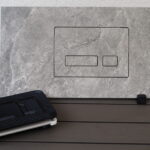
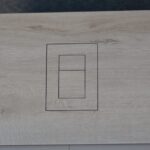
The same principle applies around concealed flush plates. A flush plate should align with the geometry of the wall, not appear as an afterthought placed wherever the cistern opening happens to be. Precise templates for common in-wall systems help maintain the correct cutout and make a demanding detail repeatable on site.
Stainless Steel Grade Is a Performance Choice
“Stainless steel” is not a complete specification. The grade and finish determine how the component handles moisture, cleaning products, fingerprints, and daily use.
For most residential bathrooms, quality stainless steel offers the right combination of strength, hygiene, and long-term appearance. It does not absorb moisture, is easy to clean, and avoids the peeling finishes or aging plastic often found on lower-cost accessories. But bathrooms are not all equally demanding. A guest powder room has a different exposure profile from a heavily used family bathroom, a hotel-style wet room, or a coastal property where airborne salt can accelerate corrosion.
In more aggressive environments, specify a grade suited to higher moisture or chloride exposure and follow the manufacturer’s maintenance guidance. Grade alone is not a guarantee. Surface contamination from installation, harsh cleaners, or neglected residue can still damage the appearance of stainless steel over time.
Match the Finish to the Design and Maintenance Plan
A polished finish creates a sharper, more reflective accent. It can work beautifully with chrome fixtures and crisp white ceramics, but it reveals water spots and fingerprints more readily. Brushed or satin stainless steel is generally calmer and more forgiving, particularly in frequently used bathrooms.
The correct choice depends on the rest of the room. If faucets, shower hardware, and flush details are warm metallic tones, a visible stainless steel frame may become a deliberate contrast or an unwanted mismatch. If the objective is a nearly invisible built-in element, choose a restrained finish and minimize the exposed perimeter.
Do not specify by product photo alone. Ask how the finish appears under the bathroom’s actual lighting, next to the tile and other metal elements. A finish that looks soft under showroom lighting can appear much brighter beneath directional ceiling spots.
Specify the Details That Determine a Clean Result
The best built-in components are defined by details that are easy to overlook before installation. Frame width, door movement, drainage, removable inserts, and access for cleaning all affect the final experience.
A recessed waste bin should allow the inner container to be removed without scraping tile edges or requiring awkward access. An integrated toilet brush needs a holder designed for straightforward cleaning and a compartment that does not trap unnecessary moisture. A concealed paper holder should make roll replacement intuitive, even for a guest using it for the first time.
For towel hooks and other load-bearing accessories, confirm the anchoring method and wall construction. A heavy towel placed repeatedly on a poorly supported recessed fitting will eventually expose a planning failure. The visible steel may be premium, but the hidden installation must be equally precise.
Consider these four practical questions before finalizing a specification:
- Does the component sit flush with the finished tile surface, with a controlled and even reveal?
- Can it be cleaned, emptied, or refilled without touching fragile tile edges or dismantling surrounding finishes?
- Does its opening direction suit the toilet, vanity, shower screen, and user movement?
- Is the selected system compatible with the wall depth, waterproofing method, and concealed sanitary frame?
These questions prevent the expensive kind of minimalism: a clean look that only works in renderings.
Hygiene Depends on Design, Not Just Material
Stainless steel is valued in bathrooms because it is nonporous and simple to wipe clean. Yet hygiene is also shaped by the construction around it. Deep seams, inaccessible corners, and poorly drained compartments create more maintenance than a material label can solve.
Choose components with smooth, accessible surfaces and removable internal elements where appropriate. Keep the interface between tile and frame crisp so residue does not accumulate in irregular gaps. Use cleaners suitable for stainless steel, and avoid abrasive pads or products containing aggressive chlorides. These can dull the finish or leave deposits that undermine corrosion resistance.
Recessed solutions also simplify floor cleaning. Removing a waste bin or toilet brush from the floor eliminates objects that collect dust around their base and obstruct mopping. It is a small change with a visible effect: the bathroom reads as more orderly because the floor remains open.
Give the Installer Exact Information
A premium detail cannot rely on improvisation. Provide the installer with product dimensions, required opening sizes, wall-depth requirements, and the final tile plan before cutting begins. If several built-in elements sit on one wall, establish centerlines and consistent heights at the same time.
The cutting stage deserves particular attention. A poor tile cut around a refined stainless steel detail remains visible every day. Accurate templates, suitable diamond blades, and controlled cutting equipment protect both the tile and the intended geometry. This is where technical accessories stop being secondary tools and become part of the design result.
PS-Tile approaches these elements as integrated architectural details: components designed to sit beneath the tile, supported by the practical tools and templates needed for precise installation. That pairing matters because a concealed accessory only looks effortless when the work behind the wall is exact.
When Surface-Mounted Components Still Make Sense
Built-in stainless steel is not automatically the right choice for every project. In a completed bathroom renovation, cutting into a waterproofed wall may be disproportionate to the benefit. Rental properties, temporary upgrades, or walls with restricted service space may also call for surface-mounted solutions.
In those cases, select fewer, better accessories and place them with the same discipline. Keep finishes consistent, avoid crowding the wall, and choose forms that are easy to clean. The goal remains the same: functional objects should not create clutter.
For new construction and full renovations, however, the opportunity is different. The wall is open, the waterproofing sequence is planned, and the tile layout is still flexible. That is the moment to specify recessed bins, concealed holders, integrated brush units, and flush details that make the finished room feel complete rather than accessorized.
A well-specified stainless steel component does not ask for attention. It removes a problem before it becomes visible, leaving a bathroom that feels cleaner, calmer, and more luxurious in daily use.