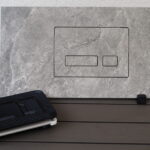
A bathroom rarely feels unfinished because of its tile or fixtures. More often, the visual noise comes later: a toilet brush on the floor, a paper holder projecting from the wall, a trash can in the corner, hooks added wherever there is space. This bathroom mounting system review looks at a more deliberate alternative: accessories designed to sit within the wall and align with the tile, rather than compete with it.
For a modern renovation, mounting is not a minor installation detail. It determines whether the room reads as a clean architectural whole or as a collection of separate products. Built-in mounting systems cost more planning at the start, but they can remove the clutter that makes even premium bathrooms feel ordinary.
What a bathroom mounting system should accomplish
A good mounting system does more than hold an accessory in place. It creates a precise relationship between the accessory, wall construction, waterproofing, tile layout, and daily use. The best result is quiet: nothing looks added after the fact, yet every function is exactly where it should be.
Traditional surface-mounted accessories are fast to install and easy to replace. That makes sense in a rental, a short-term refresh, or a bathroom where walls cannot be opened. Their compromise is visible hardware, projecting edges, and additional surfaces around which dust, moisture, and residue collect.
A recessed or under-tile solution takes the opposite approach. The functional element is integrated into the wall cavity, while the visible face remains flush or intentionally minimal. When coordinated with the grout lines and tile dimensions, the result feels elegant rather than technical.
Bathroom mounting system review: where built-ins perform best
Not every accessory benefits equally from being recessed. The strongest candidates are the pieces that usually create floor clutter or interrupt the wall plane.
Recessed toilet brush holders
A freestanding toilet brush is one of the most common visual compromises in an otherwise refined bathroom. It occupies floor space, collects moisture at its base, and is difficult to make look intentional. A built-in holder places it in a dedicated wall recess, where the brush remains accessible but visually controlled.
The practical benefit is hygiene as much as appearance. With no container sitting against the floor, the area around the toilet is easier to clean. For compact powder rooms and guest bathrooms, this small change can noticeably improve the sense of space.
The trade-off is location. The brush must be close enough for natural use without interfering with a concealed cistern frame, plumbing, or structural elements. It should be decided before tiling, not after the toilet has been installed.
Hidden toilet paper storage
A surface-mounted paper holder is functional, but it is also a permanent projection at hand height. In narrow toilet rooms, that projection can make circulation feel tighter than it is. A concealed holder built into the wall keeps the roll accessible while preserving a clean, uninterrupted tile surface.
This option is particularly effective beside wall-hung toilets and in bathrooms with large-format tile. It supports the same visual logic as a concealed flush plate: functions remain present, but the room is not defined by them.
Pay attention to the direction of use and the height of the opening. A beautiful recessed holder placed too far forward, too low, or on the wrong side of the toilet will become an everyday frustration. Precision here matters more than decoration.
Built-in waste bins
A small trash can is necessary, yet it often becomes the least considered object in the room. It sits on the floor, interrupts cleaning, and introduces another finish that may not match the rest of the interior. A built-in waste bin solves the problem by giving disposal a permanent, discreet location.
For family bathrooms, this is especially useful near the vanity or toilet area. In a guest bathroom, it keeps sanitary items out of view and allows the space to remain composed even when it is being used. The system should provide straightforward access for emptying and cleaning. Hidden should never mean inconvenient.
Recessed hooks and towel solutions
Hooks are often installed as a late decision, which is why they frequently look accidental. Surface hooks can snag clothing, protrude into a narrow passage, and visually disrupt a carefully selected wall finish. Recessed hooks or integrated towel mounting details keep the function close to the wall when not in use.
This is not always the right choice for thick, heavy bath towels. A conventional rail may provide better airflow and drying performance in a busy family bathroom. But for hand towels, robes, guest towels, or compact layouts, built-in mounting creates a sharper and more space-conscious solution.
The installation quality decides the result
A recessed accessory can look luxurious, but only if the installation is accurate. This is where a mounting system should be evaluated as a construction component, not simply as bathroom decor.
First, the installer needs to confirm wall depth and the position of pipes, electrical runs, and in-wall frames. A cavity that looks available on a plan may be occupied by a structural stud, a plumbing vent, or a concealed cistern. Coordination before wall closure prevents expensive compromises later.
Second, waterproofing must remain continuous. In wet zones, every opening requires a system-aware approach to sealing. The accessory frame, membrane connection, tile adhesive, and finishing edges need to work together. A clean visual detail is only valuable when the wall behind it is protected for the long term.
Third, tile layout should guide placement from the beginning. A recessed element centered on a random tile cut will never look as intentional as one aligned to the grid. Large-format porcelain, stone-look surfaces, and rectified tile make inaccuracies more visible, not less. Templates, accurate cutting tools, and careful dry fitting are part of the final design quality.
PS-Tile approaches these details as integrated architectural components, supported by technical accessories intended for precise work with common concealed sanitary systems. That focus matters because the difference between a clean recess and a compromised opening is usually measured in millimeters.
How to choose the right system for your project
Start with the room’s use rather than the accessory itself. A primary bathroom may benefit from a built-in waste bin, recessed brush holder, and hidden paper storage because these functions are used every day. A guest powder room may need only a discreet paper holder and brush recess to feel complete without overbuilding the wall.
Then consider the construction stage. New builds and full renovations offer the greatest freedom because wall cavities, plumbing, and tile layouts are still open to coordination. Retrofitting can still work, but it depends on wall depth and whether opening the finished surface is justified. In some cases, a refined surface-mounted accessory is the smarter choice.
Material and finish also deserve attention. The visible parts should support the bathroom’s palette without becoming decorative noise. Brushed metal can add warmth beside stone-look tile. Matte black can create a crisp contrast in a light interior. A tile-ready or flush frame can be the right answer when the goal is near-total visual restraint.
Finally, choose systems designed for serviceability. Parts that hold brushes, liners, or paper rolls need practical access. Premium design is not about hiding every mechanism at any cost. It is about placing it where it works efficiently while leaving the room visually calm.
The real value is fewer decisions after installation
The strongest argument for built-in mounting is not that every bathroom needs to look minimalist. It is that a well-planned bathroom needs fewer corrective purchases later. There is no search for a matching floor bin, no compromise hook drilled into finished tile, and no loose accessory trying to fit between the toilet and vanity.
Surface-mounted accessories remain appropriate when budget, timing, or construction limitations require flexibility. But when walls are open and the objective is a clean, elegant, long-lasting interior, integrated mounting systems deliver a level of order that cannot be added at the end.
Plan the details while the wall is still a plan. Once tile, fixtures, and lighting are aligned around the same quiet logic, the bathroom feels less furnished and more complete.