A bathroom can have beautiful tile, premium fixtures, and carefully selected lighting, yet still feel unfinished because of what sits on the wall, floor, and vanity. The decision between open versus concealed bathroom storage determines whether daily necessities become part of the visual composition or disappear into a clean architectural surface. It is not simply a question of style. It affects cleaning, available space, hygiene, installation planning, and the long-term impression of the room.
For a minimalist bathroom, storage should support the architecture rather than compete with it. That does not mean every item must be hidden. It means every visible item should earn its place.
Open versus concealed bathroom storage: the real difference
Open storage keeps objects in view. Think shelves, countertop trays, ladder racks, wall-mounted baskets, and open niches filled with towels or toiletries. It gives immediate access and can bring warmth to an otherwise restrained room. In the right setting, it creates a relaxed, lived-in character.
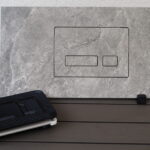
Concealed storage places those same necessities behind a cabinet front, inside a recessed wall element, or within an integrated accessory. The goal is visual calm. A built-in toilet brush, recessed waste bin, hidden toilet paper holder, or flush-mounted towel hook removes familiar objects from sight without removing their function.
The better option depends on what is being stored and how the bathroom is used. Decorative towels can look intentional on an open shelf. A spare toilet roll package, cleaning products, a waste bin, and a toilet brush rarely improve the visual result. Concealment is especially valuable for the functional objects that create clutter fastest.
Why open storage is appealing
Open storage has an immediate advantage: there is no door, pull, or extra movement between you and the item you need. A recessed shelf inside a shower, for example, keeps shampoo and soap at hand while avoiding a hanging caddy. Open shelving near the vanity can make everyday skincare and neatly folded towels easy to reach.
It also has a visual role. Natural wood shelves, carefully chosen containers, and a small stack of quality towels can soften stone-look tile or a monochrome bathroom. In a guest bathroom, a narrow open niche can communicate hospitality by presenting fresh towels and essentials clearly.
There is a practical construction benefit as well. Surface-mounted shelves can be added late in a project with relatively little intervention. This makes them useful when a renovation is already complete or when wall depth does not allow for recessing.
But openness requires discipline. Anything placed on display becomes part of the design. Mixed packaging, nearly empty bottles, charging cables, disposable products, and uneven towel stacks quickly turn a clean room into visual noise. Open shelves also collect dust and moisture, especially in compact bathrooms with limited ventilation. The more objects they hold, the more edges and surfaces require regular cleaning.
Where open storage works best
Open storage is strongest when it is limited and purposeful. Use it for attractive, frequently used items: two or three rolled towels, a small tray with daily products, or a shower niche sized for the bottles actually used. It works less well as a catch-all solution.
A useful design rule is to keep open storage shallow and edited. Deep shelves invite excess. Shallow niches and shelves encourage only the essentials, maintaining a lighter and more elegant appearance.
The value of concealed bathroom storage
Concealed storage creates order before the room is even used. When the waste bin, toilet brush, extra paper, and smaller accessories are integrated into the wall or furniture, the bathroom keeps its clean lines throughout the day. There are fewer loose objects to move when cleaning and fewer visual interruptions against the tile.
This approach is particularly effective around the toilet, where many conventional accessories are visually heavy despite their small size. A freestanding brush holder, exposed roll holder, and floor bin can make even a well-designed toilet area feel crowded. Integrating these elements into the tiled wall produces a more precise, luxury result and releases valuable floor space.
Concealed storage also supports hygiene. Floor-standing accessories create tight gaps around their bases, where dust and moisture collect. Wall-integrated elements reduce these awkward cleaning zones. The result is not a maintenance-free bathroom, but it is a more rational one: fewer exposed supports, fewer objects on the floor, and simpler access to the surfaces that remain.
For compact bathrooms, this is often the decisive factor. A few inches recovered beside a wall-hung toilet or narrow vanity can improve movement significantly. The room feels larger because the floor and wall planes remain visually continuous.
Concealed does not have to mean inaccessible
A common concern is that integrated components will be inconvenient to refill, service, or clean. Well-designed built-in accessories solve this through accessible inserts, removable containers, and considered openings. A concealed waste bin still needs a practical way to remove the inner container. A hidden toilet paper holder must allow quick replenishment. Good integration is not about making function difficult to find. It is about placing function exactly where it is needed without leaving it permanently on display.
This is where precision matters. Products designed for installation under tile should align cleanly with the finished surface and work with the selected wall system. The final detail must look intentional, not improvised. PS-Tile focuses on these built-in components and the technical accessories that help installers achieve that accurate result.
Plan concealed elements before tile installation
Open storage can often be adjusted after the room is finished. Concealed storage is different. Its greatest design advantage comes with a planning requirement: decide early.
Before waterproofing and tile installation, map the daily routine in the room. Consider where a person reaches for toilet paper, where a hand towel is used, where waste is generated, and where a brush should be stored without occupying floor space. This turns the wall from a background surface into a functional part of the bathroom.
Coordinate these decisions with plumbing, wall framing, concealed cisterns, electrical points, and tile layout. A recessed accessory should not interrupt a tile pattern carelessly or conflict with pipes and structural elements. The best result comes from aligning dimensions with the tile module, so openings appear composed rather than cut into the wall as an afterthought.
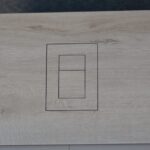
Professional tools and templates have a role here. Accurate marking and cutting are not minor details when an element sits within a prominent tiled wall. A clean edge, correct depth, and reliable compatibility with systems such as concealed frames make the difference between a premium finish and a detail that draws attention for the wrong reason.
How to choose what stays visible
The strongest bathrooms rarely commit completely to either extreme. They use a hierarchy.
Keep visible what adds comfort, warmth, or immediate daily value. This may include a recessed shower niche, one open shelf for fresh towels, or a refined countertop tray. Conceal what is utilitarian, disposable, or visually inconsistent: cleaning supplies, spare packaging, bins, brushes, and bulky toilet accessories.
The same principle applies to vanity storage. A beautiful vanity counter should not become permanent parking for every product. Keep one or two daily items accessible, then place the rest in drawers or a mirrored cabinet. This protects the calm visual effect that drew you to a minimalist bathroom in the first place.
Material choice can help unify both approaches. An open niche lined in the same tile as the wall feels quieter than a contrasting shelf. Concealed access panels finished to match the surrounding tile can become nearly invisible. Hardware should be selected with equal restraint, whether it is brushed metal, black, or a finish matched to the faucet.
A practical balance for each bathroom zone
In the shower, open recessed storage is usually the most functional answer. Products need to be accessible with wet hands, and a properly detailed niche is cleaner and more durable than add-on racks. Keep the niche sized to avoid collecting unused bottles.
At the vanity, concealed drawers and cabinets should carry most of the load. They protect the counter from clutter and simplify cleaning. One carefully considered open shelf can work if it has a defined purpose and is not expected to absorb overflow.
Around the toilet, concealment delivers the greatest visual return. Integrated paper storage, a built-in brush, a recessed bin, and flush-mounted hooks remove the collection of small accessories that usually disrupts this area. The wall remains clean, the floor remains open, and the room feels more spacious.
A refined bathroom is not empty. It is organized so precisely that function never interrupts the experience of the space. Choose open storage for the few things worth seeing, and build the rest into the architecture. That balance creates a bathroom that looks calm on the first day and still feels effortless after years of everyday use.